
Pipeline Pig & Inline Inspection Tracking
Real-time tracking of pigs and inline inspection tools — trajectory, position and speed, with precise stuck-pig localization.
What is fiber-optic pipeline pig tracking?
Fiber-optic pipeline pig tracking uses the distributed acoustic sensing capability of a fiber optic cable laid alongside the pipeline to follow the passage of cleaning pigs, utility pigs and inline inspection (ILI) tools in real time. As a pig travels through the line, its acoustic and vibration signature is picked up by the adjacent fiber; the system converts these signatures into a live trajectory with position and speed along the route. No hardware is installed inside the pipeline and no equipment rides on the pig, so tracking works with all pig types and inspection tools. Landsub Global teams have accumulated more than 3000 km of tracked runs, including stuck-pig localization for rapid recovery.
- Real-time output — trajectory, position and speed reported continuously during the run
- 3000+ km of accumulated tracked pipeline runs
- All pig types and inline inspection tools supported
- Stuck-pig localization — pinpoint a stopped pig directly for intervention crews
- No in-line hardware — sensing relies on the spare cores of the external cable
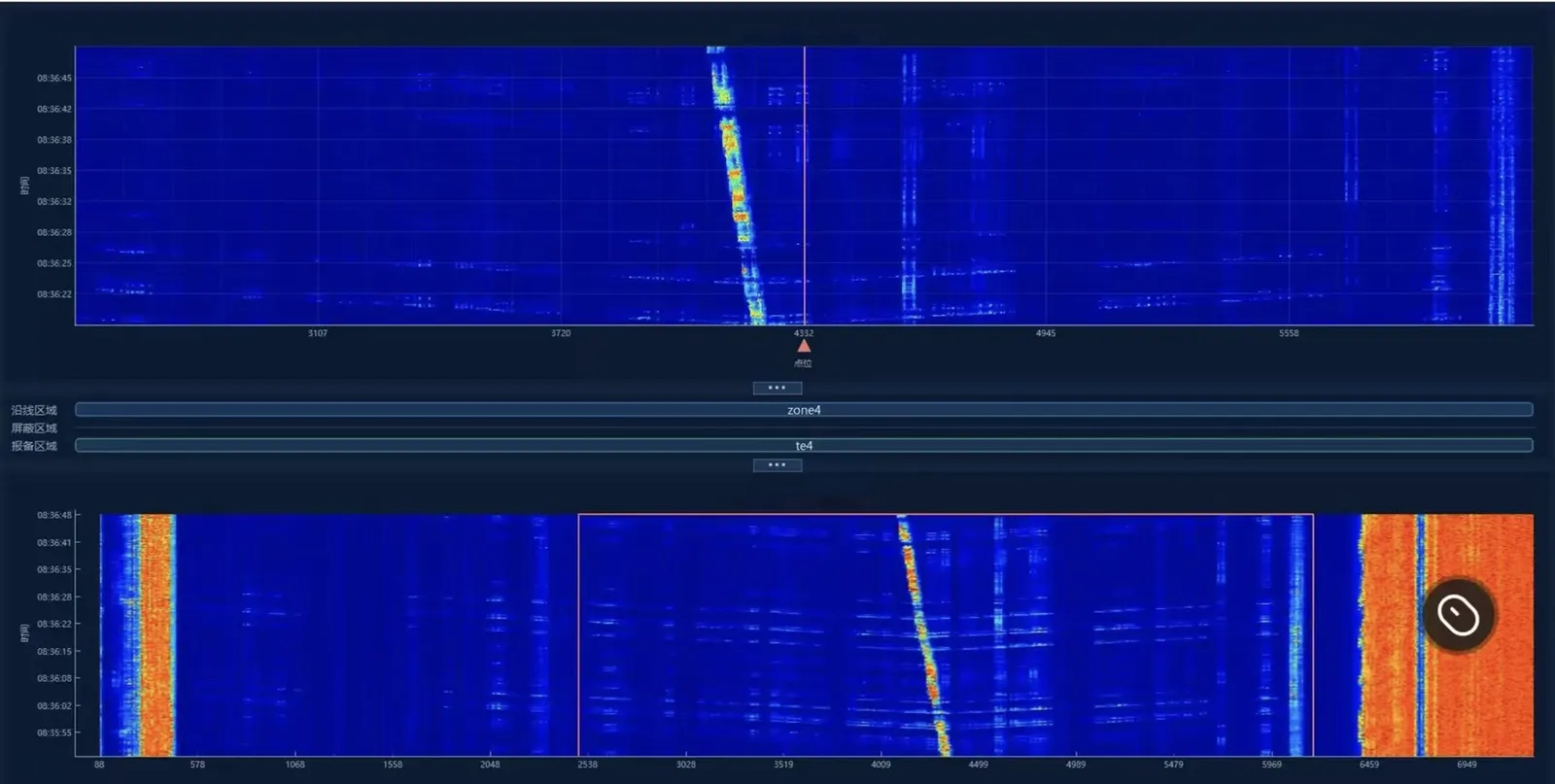
| Pig types | All types and inline inspection tools |
|---|---|
| Tracking experience | 3000+ km |
| Output | Trajectory / position / speed in real time |
Applications: detection, tracking and third-party damage warning
Inline inspection
Track inspection tools through long-haul pipelines.
Pig tracking
Monitor cleaning and utility pigs.
Stuck-pig localization
Pinpoint a stuck pig for fast recovery.
Leak & intrusion
Combined third-party damage and leak warning.
Fiber-optic tracking vs. conventional pig tracking
| Aspect | Conventional tracking (manual crews / pass-by receivers) | Fiber-optic tracking |
|---|---|---|
| Position information | Logged after the pig passes receiver points | Continuous real-time trajectory, position and speed |
| Stuck-pig response | Narrow the search range section by section | Direct localization of the stopped pig |
| Field manpower | Crews and vehicles deployed along the right-of-way | Monitoring from the control room |
| In-pipeline equipment | Transmitters or geophones may be added to the pig train | None — the external fiber does the sensing |
| Accessibility limits | Blind where terrain or access blocks the crew | Covers the full cabled route, including crossings |
Comparison reflects typical conventional tracking practice; on some runs both methods are used together for redundancy.
How a pig-tracking run works: from installation to report
Tracking is delivered as a service around the pigging operation itself — the sequence follows the run.
- Step 1 — Pre-run survey and fiber check. The pipeline route and the co-located fiber are surveyed, and the sensing fiber cores are tested to confirm coverage of the full run.
- Step 2 — System setup and signature briefing. The tracking unit is connected, launch and receiver points are confirmed with the operations team, and expected pig signatures are reviewed.
- Step 3 — Live tracking during the run. The pig's passage is tracked continuously — position, speed and direction — and the operations team receives live updates from launch to arrival.
- Step 4 — Stuck-pig localization (if needed). If progress stops, the system pinpoints the position along the line so the intervention crew is dispatched straight to the site.
- Step 5 — Run report and debrief. The full trajectory and event log are handed over as a report supporting the inspection campaign record.
Where pig tracking fits: long-distance coverage and boundaries
Pig tracking is a specialized service around inline inspection campaigns, not a permanent monitoring product — the same fiber route can, however, later carry continuous DAS monitoring.
- Good fit: long-haul pipeline cleaning runs, ILI tool runs (geometry, MFL, caliper), commissioning pigging, and any run where a stuck pig would be costly to locate by hand.
- Good fit: pipelines that already have a fiber optic cable along the route — no pipeline modification or in-line equipment is required.
- Boundary: tracking quality depends on a continuous cabled route; ungasketed sections beyond the fiber end, or lines with no co-located cable, are outside coverage.
- Not a fit: pipelines with no fiber route, and inspection data analysis of the ILI tool itself — tracking reports where the tool is, not what it records.
Operationally, a tracking engagement is planned around the pigging schedule rather than around the monitoring system: the fiber check and setup happen before launch, the tracking desk runs for the duration of the passage, and the run closes with a trajectory report that files into the inspection-campaign record. Because runs are discrete events, several runs on different lines can be supported from the same equipment set over a campaign — which is how operators with long multi-line networks typically schedule the service, line by line, alongside their ILI vendor's calendar. The accumulated record now stands at more than 3000 km of tracked runs across cleaning, utility and inline inspection campaigns.
Frequently asked questions
What the tracking system senses: acoustic measurement during a run
A moving pig displaces product, contacts the pipe wall and generates a distinctive acoustic and vibration signature that propagates into the soil and reaches the co-located fiber optic cable. The distributed sensing system detects this signature at successive positions along the route, so the pig's passage is registered continuously rather than at isolated receiver stations. From these detections the system reconstructs the run: distance traveled, current position, average and instantaneous speed, and — critically — the moment and location if movement stops.
- Cleaning pigs: position and speed reported from launch to arrival, so the run stays visible end to end.
- Inline inspection tools: high-value ILI tools are tracked with the same continuous coverage, protecting the investment in the inspection campaign.
- Stuck-pig localization: when progress stops, the stopping point is identified directly — the intervention crew is dispatched to a position, not to a search area.
- Run context: passage events are logged with time and distance, building the trajectory record handed over in the run report.
Because the sensing line is the existing external cable, nothing changes inside the pipeline: no transmitters fitted to the pig train, no launch or receiver modifications, and no tool-loss risk added by tracking equipment itself.
Related pipeline monitoring products
Further reading
- Pigging — what pipeline pigs are and why tracking their passage matters to operators.
- Pipeline transport — the operating context for inline inspection and pigging campaigns.
- Distributed acoustic sensing — the sensing principle that detects a pig's passage along the fiber.
- Fiber optic sensor — background on distributed fiber sensing architectures.
Get a configuration and quote
Tell us your scenario — we'll provide a tailored recommendation.
Last updated: September 2026
By the Landsub Global Engineering Team